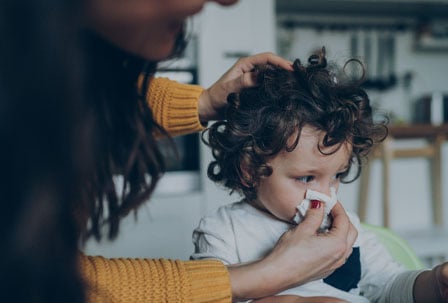
Red cheeks, congestion, or nonstop fussiness may signal that your little one might have an infant allergy. While this can be challenging, rest assured: infant allergies are very common.
The tricky thing about allergies is that they can come unexpectedly and sometimes be difficult to understand – whether they are from food, the environment, what they wore, the seasons, or a combination.
Below, we’re sharing more about the signs of allergies in infants and their causes as well as some everyday solutions to help your little one.
What Causes Allergies in Infants?
You might be wondering: can infants have allergies? The short answer is yes! Infant allergies can sneak up on you and the triggers often hide in plain sight. Sometimes the fluffy blanket or the slightest gust of wind can introduce tiny irritants that overwhelm a baby’s delicate immune system.
Here are some of the most common offenders that could be stirring up your little one’s symptoms.
Everyday Irritants at Home
Your home may seem like the safest place for your baby, but some indoor air pollutants or items can trigger nasty allergies. Some suspects include:
Detergents: That “fresh” laundry smell? It might come with harsh chemicals or fragrances that can irritate your baby’s skin or tickle their nose the wrong way.
Dust Mites: These itty-bitty bugs love cozy places like bedding, carpets, and those beloved stuffed animals.
Pet Dander: Even the fluffiest “hypoallergenic” pets shed tiny skin flakes that can cause reactions in sensitive little ones.
Mold/Mildew: Lurking in steamy bathrooms or forgotten corners, mold releases spores that can mess with breathing.
Seasonal Sniffles
If you think seasonal allergies only hit older kids? Think again. Even though they’re more common when kids get older, infants aren’t totally in the clear (especially when pollen counts are high). Their tiny noses can be extra sensitive to what’s floating around outside. If your baby seems unusually fussy on high-pollen days or their symptoms worsen after a stroller walk through the park, it could be more than just a stuffy nose.
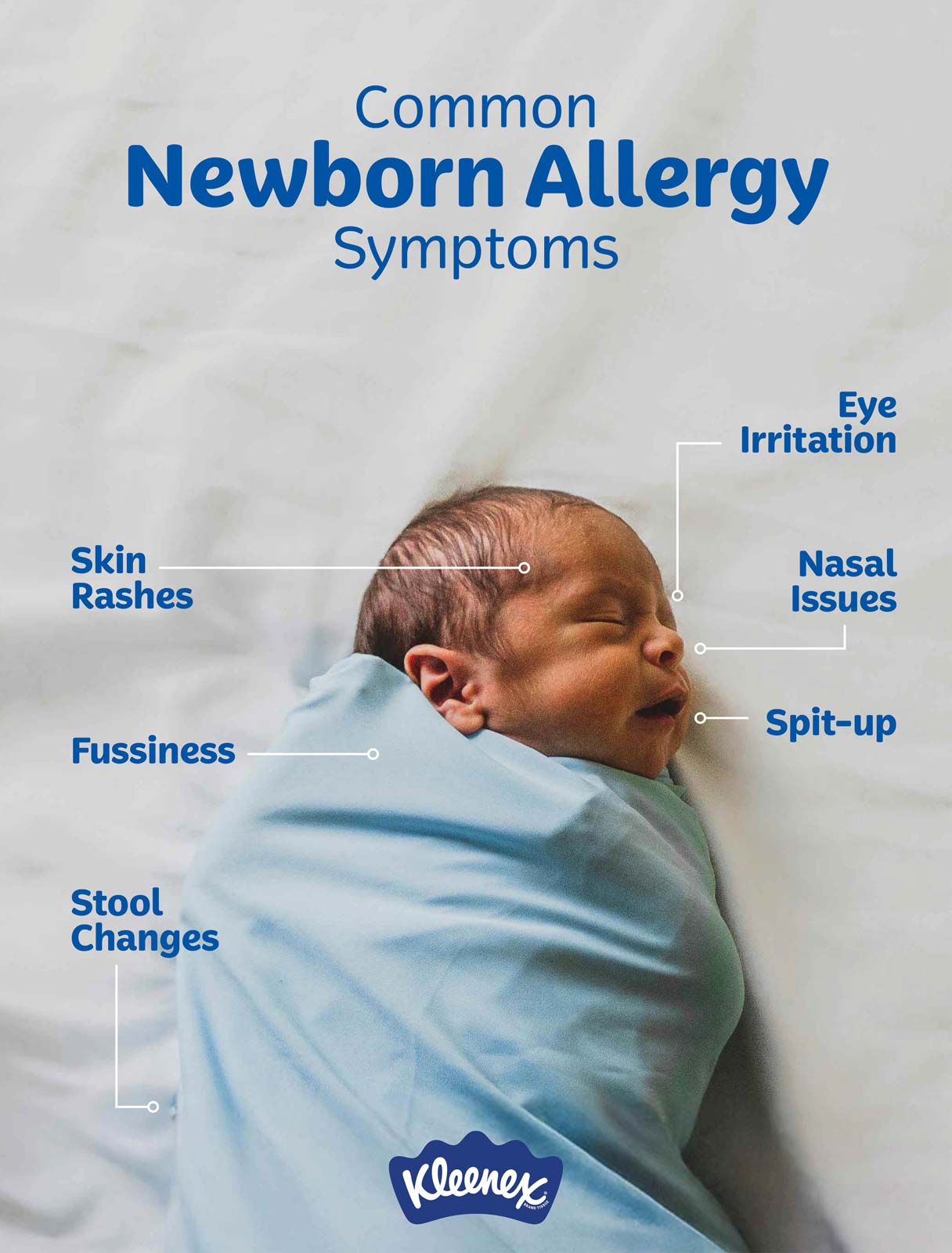
Common Newborn Allergy Symptoms
Skin Rashes: Often appears on the cheeks, chest, or diaper area.
Fussiness: If your baby seems unusually cranky after feeding and soothing them doesn’t seem to help.
Spit-up: While some spit-up is normal, frequent vomiting or signs of reflux (like arching the back or wincing mid-feed) might suggest a sensitivity to formula or something in your diet if you're breastfeeding.
Nasal Issues: Constant stuffiness or sneezing with no sign of a cold? That cute little nose might be reacting to something in the air.
Eye Irritation: Watery, red, or puffy eyes may show up even if your baby hasn’t been crying.
Stool changes: Loose, runny stools or mucus in the diaper can be your baby’s gut trying to work through something it doesn’t like.
How Can You Help an Infant with Allergies
1. Keep a Symptom Diary
Track when symptoms start, how long they last, and what your baby was exposed to. Things like new foods, pets, detergents, or weather shifts. Patterns can emerge over time and help pinpoint triggers. Some parents notice flare-ups during certain seasons or after time outdoors, which could point to airborne allergens like pollen.
Tools like the Kleenex® Pollen Pal makes it easier to track daily pollen levels in your area, helping you connect environmental changes to your baby’s symptoms more clearly. The more clues you gather, the closer you get to understanding what’s really going on.
2. Review Feeding Options
If your baby is formula-fed and starts showing signs like skin rashes, vomiting, or unexpected diaper blowouts, it could be a reaction to milk protein. In that case, check in with your pediatrician to try out a hypoallergenic formula.
3. Minimize Environmental Irritants
Allergens like dust, pollen, mold spores, or pet dander are silent triggers. Try using Kleenex® Air Filters that effortlessly connect to your HVAC system to trap airborne allergens (especially in spaces like the nursery). These filters work quietly behind the scenes to improve your overall indoor air quality to create a more breathable space for your baby.
4. Changing Clothes After Outdoor Time
Fresh air is great, but pollen and dust love to tag along. After time outside, give your baby’s hands and face a rinse with water and a gentle towel or wipe.
5. Keep Pets Off Soft Surfaces
If you have furry pets, try to keep them off areas where your baby spends the most time. These would be spots like your baby’s play mat, crib, or the couch where cuddle time happens. Dander clings to soft surfaces and can quietly stir up sniffles or skin flare-ups, especially when you're still figuring out your baby’s triggers.
What You Notice Matters
The truth is, you’re already doing something powerful just by being observant. Every diaper change, every feeding, every cuddle is a chance to learn something new about your baby. With time, support, and a little detective work, you’ll be better equipped to navigate what’s causing discomfort (and how to ease it). You’ve got this!
Worried about your baby’s sniffles? Keep their delicate nose comfortable with Kleenex® Ultra Soft™ Tissues.