Inconvenient and not pleasant, a runny nose can really interfere with your day. Luckily, there are a few simple and effective techniques you can try at home to slow the drip. This helpful Kleenex® Brand guide explains what triggers a runny nose, home remedies to treat symptoms, and easy preventative measures.
Why is My Nose Running?
What causes a runny nose, or as it’s medically called, rhinorrhea? Your nose is lined with tissue that produces mucus to trap dust, germs, and allergens. When you get a cold, encounter allergens, or breathe in irritants, your body releases chemicals, histamines, to ramp up mucus production to flush out the intruder. This extra fluid (mucus) then drains out from your nostrils or down the back of your throat, this is known as postnasal drip. Temperature changes and dry air can also trigger a runny nose by irritating this lining.
Common Causes
- Seasonal allergies
- The common cold
- Influenza (the flu) or other respiratory viruses
- Sinusitis (sinus infection)
- Hot or cold air
- Smoke, strong fragrances, or other irritants
- Spicy food
- Animal dander
- Dust, dust mites, mold
How Long Does a Runny Nose Last?
How long a runny nose lasts depends on what caused it:
Colds: Most clear up in about 7 – 10 days, with the runny phase often heavier in the first few days.
Seasonal Allergies: Symptoms can last as long as you’re exposed to your specific triggers. Unfortunately, it could be days to weeks in high pollen seasons, or year-round with indoor allergens like dust mites or pets.
Irritants: These can include things like cigarette smoke or perfumes. Once the irritant is gone, the runny nose drip can improve within hours or a couple of days.
Sinus infection: This is an inflammation or swelling of the tissue lining your sinuses. Viruses cause most sinus infections, but bacteria can be a cause too. A sinus infection can last many days to weeks.
What Can I Do at Home to Treat a Runny Nose?
When your nose doesn’t stop dripping, the goal is to soothe the lining, thin the mucus, and reduce irritation. Try these simple, easy home remedies to treat your runny nose.
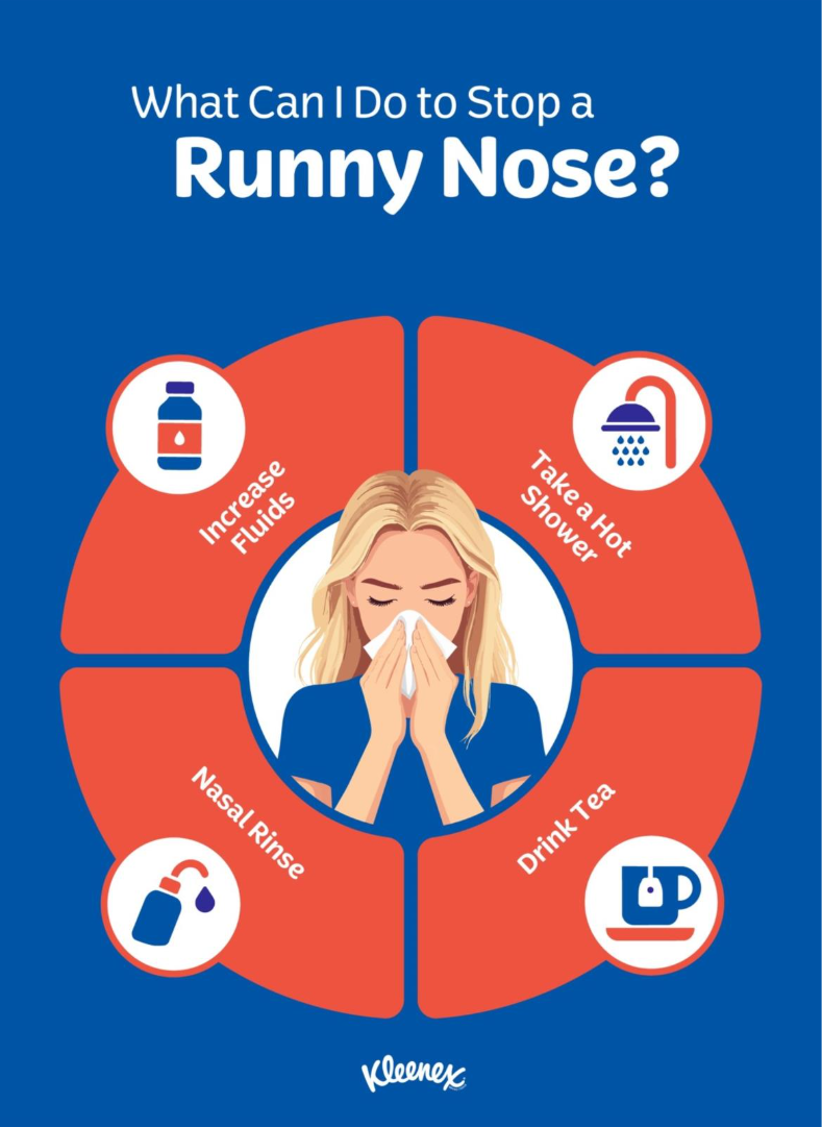
Increase Your Fluids & Hydration
Increasing your fluids, like water, warm broths, herbal teas, and electrolyte beverages, can thin out the mucus to make it easier to clear out while also preventing a continuous drip and clogged ears.
Another way to help hydrate your nasal passages is using a cool-mist humidifier in your bedroom, or around your house to add moisture to dry indoor air.
Take a Hot Shower
A hot shower with plenty of steam is a great way to both relax and help drain your nose. Add an extra benefit by using a eucalyptus steamer puck or spraying a eucalyptus blend into the shower. Eucalyptus can help in relieving cold symptoms while being easy on sensitive noses. Immediately after you shower, blow your nose to get the loosened mucus out of your nose.
Drink Hot Tea
This is simply a comforting combination of the two remedies above. Warm drinks not only aid in keeping you hydrated, but the hot water also serves as a micro-steamer, as you inhale steam with every sip to soothe your nasal passages. Herbal teas are also excellent for their aromatic and all-around calming effects. Our go-to favorites are ginger, chamomile, peppermint, or lemon with honey.
Try Nasal Irrigation
Nasal irrigation with saline(saltwater) works by rinsing/flushing out your sinuses of allergens, viruses, and irritants. Always use sterile, distilled, or boiled and cooled water.
Tips to Avoid Irritating Your Runny Nose
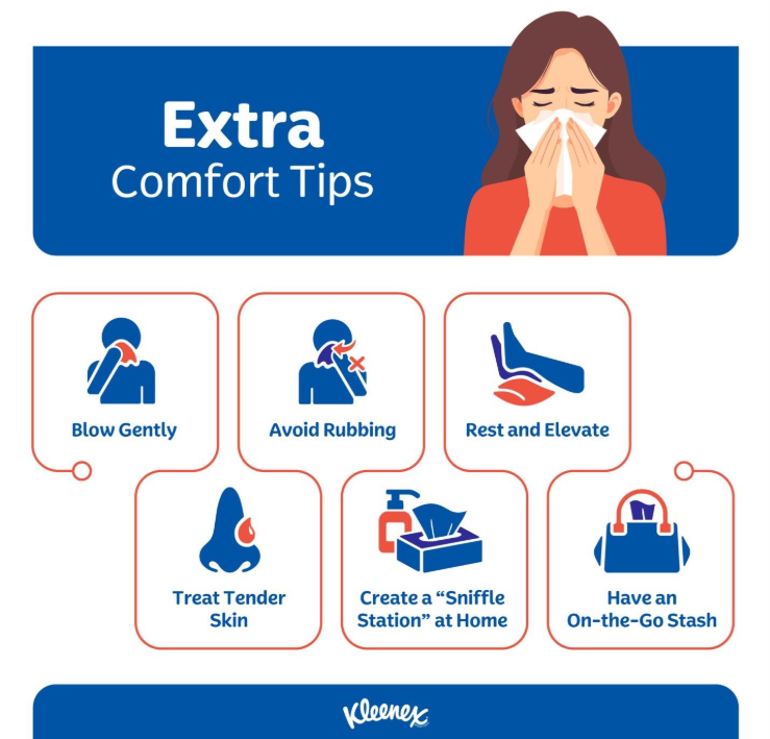
Blow Your Nose Gently
Forceful nose blowing can irritate your nasal lining and prolong redness and inflammation. When you need to blow your nose, gently press one nostril closed and blow softly from the other side. Repeat on the other side.
Avoid Rubbing and using Toilet Paper or Paper Towels
When blowing your nose, dab, don’t rub. Repeated rubbing, especially with rougher surfaces like toilet paper or paper towels that can cause chafing. Gentle tissues like Kleenex® Ultra Soft™ Tissues are great for keeping irritation down.
Rest and Elevate
If you can, take time to rest and elevate your head on pillows or a foam wedge.
Treat Tender Skin
Dabbing a thin layer of petroleum jelly or a fragrance-free balm or cream around the nostrils and nose area can help prevent chafing. Reapply after washing your face or before bed. Use a product like Kleenex® Lotion Facial Tissues which are designed to moisturize and help prevent skin irritation.
Create a “Sick Care Station” at Home
Place a box of tissues, a pump of hand sanitizer, a small trash can or lined basket, a saline spray, and petroleum jelly, balm, or lotion in one place in your home.
Have an On-the-Go Stash
Runny noses can happen anywhere, so stay prepared with Kleenex® Snap & Go™ Ultra Soft™ Facial Tissues. Keep them in the car, your purse, and in kids’ backpacks for relief while on the move.
Can I Prevent a Runny Nose?
Protect Yourself During Cold and Flu Season
It’s always good practice to wash your hands regularly, but particularly during cold and flu season, it’s important to prevent the spread of germs. Wash hands with soap and water for at least 20 seconds after blowing your nose, coughing, sneezing, or caring for a sick child. Cover coughs and sneezes with a tissue and dispose of it immediately before washing your hands.
Another important tip is not to share drinkware, utensils, or towels during cold and flu season and utilize Kleenex® Brand Anti-Viral† Tissues that can kill 99.9% of cold and flu viruses† in the tissue.
Runny Nose FAQs
What Causes a Runny Nose to Get Worse at Night?
Lying down can increase nasal blood flow, cause swelling, and mucus production. Try an extra pillow, run a cool-mist humidifier, and do a gentle saline rinse before bed.
How Can I Help My Child’s Runny Nose?
Offer frequent sips of fluids, run a humidifier in your house or their bedroom, and use saline drops. Choose soft, lotion tissues to protect delicate skin, like Kleenex® Lotion Facial Tissues. For younger children, use a suction bulb to clear mucus, as they cannot blow their noses themselves.
Which Tissues Are Best for a Runny Nose?
When you’re managing frequent wiping of your nose or caring for a child with a drippy nose, the right tissue can make a big difference. Our range of Kleenex® Brand Tissues offer a wide range of support, from moisturizing sensitive noses to guarding against germs. Find the perfect fit for you and your family below.
Find the Right Kleenex® Products for Runny Nose Comfort and Care
Kleenex® Ultra Soft™ Tissues
These tissues are silky soft for up to 100% irritation-free skin during frequent nose blowing with Kleenex® Ultra Soft™ Facial Tissues, the perfect solution to help you manage a runny nose with silky softness that helps keep skin up to 100% irritation free.
Kleenex® Lotion Facial Tissues
Kleenex® Lotion Facial Tissues are made with ingredients like coconut oil and aloe to pamper skin. The 3-in-1 skin-loving benefits protect hands, soothe skin, and moisturize with lotion. They are ideal for sensitive skin, persistent cold symptoms, and kids who consistently rub their noses.
Kleenex® Cooling + Aloe Facial Tissues
Kleenex® Cooling + Aloe Facial Tissues provide cooling freshness to help skin feel restored, even during your worst nasal symptoms. These tissues are formulated for instant cooling relief when you're feeling under the weather or battling allergies. Ideal for hot, inflamed skin and allergy flare days when your nose needs extra TLC.
Kleenex® Brand Anti-Viral† Tissues
Kleenex® Brand Anti-Viral† Tissues are tissues that contain a moisture-activated layer which can kill 99.9% of cold and flu viruses† in the tissue within 15 minutes. They are ideal for home, offices, classrooms, and shared spaces during the cold and flu season.
†Virucidal against: Rhinoviruses Type 1A and 2 (Rhinoviruses are the leading cause of the common cold), Influenza A virus and Influenza B virus (causes the flu); Respiratory Syncytial Virus (RSV — the leading cause of lower respiratory tract infection in children). This product has not been tested against bacteria, fungi or other viruses.
The information provided in this article is for informational purposes only and is not intended as medical advice. Always consult your medical provider with any questions and/or concerns you may have regarding medical symptoms and conditions.